•  

South Africa: Fire Breaks Out On Table Mountain, Prompting Road Closures 3

A fire broke out in Newlands Ravine on Sunday, February 23. The flames spread quickly to other parts of Table Mountain and moved to Cape Town’s central business district due to strong winds. The flame prompted road closures in the nearby area. There are no reports of injuries at the time of writing. This video shows the firefighting operation by a helicopter on the Newlands fire.

  •  

South Africa: Fire Breaks Out On Table Mountain, Prompting Road Closures 2

A fire broke out in Newlands Ravine on Sunday, February 23. The flames spread quickly to other part of Table Mountain and now moving to Cape Town’s central business district due to strong winds. The flame prompted road closures in the nearby area. There are no reports of injuries at the time of writing.

  •  

South Africa: Fire Breaks Out On Table Mountain, Prompting Road Closures

A fire broke out in Newlands Ravine on Sunday, February 23. The flames spread quickly to other part of Table Mountain and now moving to Cape Town’s central business district due to strong winds. The flame prompted road closures in the nearby area. There are no reports of injuries at the time of writing.

  •  
(EyesOnSci)CHINA-YUNNAN-DEBRIS FLOW-SCIENTIFIC RESEARCH (CN)

(EyesOnSci)CHINA-YUNNAN-DEBRIS FLOW-SCIENTIFIC RESEARCH (CN)

(240514) -- DONGCHUAN, May 14, 2024 (Xinhua) -- Researchers Li Xiaoyu (R) and Wei Li maintain experimental devices and collect data at the Jiangjiagou ravine in Dongchuan District of Kunming, southwest China's Yunnan Province, May 7, 2024. The Jiangjiagou ravine, located in the Xiaojiang River Basin, was a frequent landslide occurring area. In 1961, an observation and research station of debris flows, known as Dongchuan Station, was established in Jiangjiagou area. Since then, several generations of researchers have observed and studied debris flows, and established a comprehensive disaster reduction model of "stabilizing, blocking and draining", which has laid the foundation of debris flow science in China. A large-scale dynamic simulation experiment platform for mountain disaster was recently put into use in Dongchuan Station. The completion of this scientific device will reveal the natural law of debris flow outbreak, tackle the problems on prevention and control, and reduce the harm on human. (Xinhua

  •  
(EyesOnSci)CHINA-YUNNAN-DEBRIS FLOW-SCIENTIFIC RESEARCH (CN)

(EyesOnSci)CHINA-YUNNAN-DEBRIS FLOW-SCIENTIFIC RESEARCH (CN)

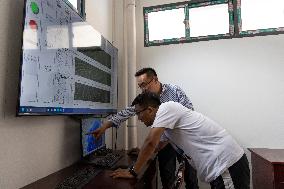
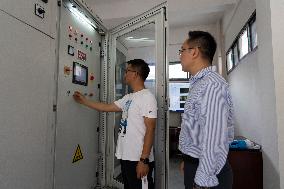
(240514) -- DONGCHUAN, May 14, 2024 (Xinhua) -- Researchers Zhou Gongdan (back) and Zhong Wei work at the control center of the large-scale dynamic simulation experiment platform for mountain disaster at Dongchuan Station in Dongchuan District of Kunming, southwest China's Yunnan Province, May 8, 2024. The Jiangjiagou ravine, located in the Xiaojiang River Basin, was a frequent landslide occurring area. In 1961, an observation and research station of debris flows, known as Dongchuan Station, was established in Jiangjiagou area. Since then, several generations of researchers have observed and studied debris flows, and established a comprehensive disaster reduction model of "stabilizing, blocking and draining", which has laid the foundation of debris flow science in China. A large-scale dynamic simulation experiment platform for mountain disaster was recently put into use in Dongchuan Station. The completion of this scientific device will reveal the natural law of debris flow outbreak, tackle the problems

  •  
(EyesOnSci)CHINA-YUNNAN-DEBRIS FLOW-SCIENTIFIC RESEARCH (CN)

(EyesOnSci)CHINA-YUNNAN-DEBRIS FLOW-SCIENTIFIC RESEARCH (CN)

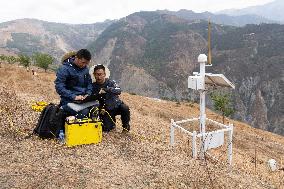
(240514) -- DONGCHUAN, May 14, 2024 (Xinhua) -- Researchers Song Dongri (1st R) and Li Xiaoyu (1st L) communicate with equipment manufacturers about installation technology of observation equipment at the Jiangjiagou ravine in Dongchuan District of Kunming, southwest China's Yunnan Province, May 8, 2024. The Jiangjiagou ravine, located in the Xiaojiang River Basin, was a frequent landslide occurring area. In 1961, an observation and research station of debris flows, known as Dongchuan Station, was established in Jiangjiagou area. Since then, several generations of researchers have observed and studied debris flows, and established a comprehensive disaster reduction model of "stabilizing, blocking and draining", which has laid the foundation of debris flow science in China. A large-scale dynamic simulation experiment platform for mountain disaster was recently put into use in Dongchuan Station. The completion of this scientific device will reveal the natural law of debris flow outbreak, tackle the problem

  •  
(EyesOnSci)CHINA-YUNNAN-DEBRIS FLOW-SCIENTIFIC RESEARCH (CN)

(EyesOnSci)CHINA-YUNNAN-DEBRIS FLOW-SCIENTIFIC RESEARCH (CN)

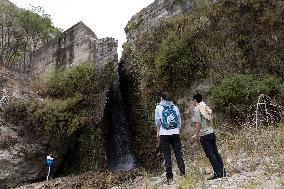
(240514) -- DONGCHUAN, May 14, 2024 (Xinhua) -- Researchers Li Zhanlu (L) and Zhong Wei talk about measures to detect the structure of slopes at the Jiangjiagou ravine in Dongchuan District of Kunming, southwest China's Yunnan Province, May 7, 2024. The Jiangjiagou ravine, located in the Xiaojiang River Basin, was a frequent landslide occurring area. In 1961, an observation and research station of debris flows, known as Dongchuan Station, was established in Jiangjiagou area. Since then, several generations of researchers have observed and studied debris flows, and established a comprehensive disaster reduction model of "stabilizing, blocking and draining", which has laid the foundation of debris flow science in China. A large-scale dynamic simulation experiment platform for mountain disaster was recently put into use in Dongchuan Station. The completion of this scientific device will reveal the natural law of debris flow outbreak, tackle the problems on prevention and control, and reduce the harm on huma

  •  
(EyesOnSci)CHINA-YUNNAN-DEBRIS FLOW-SCIENTIFIC RESEARCH (CN)

(EyesOnSci)CHINA-YUNNAN-DEBRIS FLOW-SCIENTIFIC RESEARCH (CN)

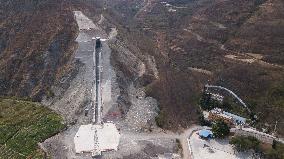
(240514) -- DONGCHUAN, May 14, 2024 (Xinhua) -- An aerial drone photo taken on May 7, 2024 shows the large-scale dynamic simulation experiment platform for mountain disaster at Dongchuan Station in Dongchuan District of Kunming, southwest China's Yunnan Province. The Jiangjiagou ravine, located in the Xiaojiang River Basin, was a frequent landslide occurring area. In 1961, an observation and research station of debris flows, known as Dongchuan Station, was established in Jiangjiagou area. Since then, several generations of researchers have observed and studied debris flows, and established a comprehensive disaster reduction model of "stabilizing, blocking and draining", which has laid the foundation of debris flow science in China. A large-scale dynamic simulation experiment platform for mountain disaster was recently put into use in Dongchuan Station. The completion of this scientific device will reveal the natural law of debris flow outbreak, tackle the problems on prevention and control, and reduce th

  •  
(EyesOnSci)CHINA-YUNNAN-DEBRIS FLOW-SCIENTIFIC RESEARCH (CN)

(EyesOnSci)CHINA-YUNNAN-DEBRIS FLOW-SCIENTIFIC RESEARCH (CN)

(240514) -- DONGCHUAN, May 14, 2024 (Xinhua) -- Researchers Zhou Gongdan (R) and Zhong Wei work at the control center of the large-scale dynamic simulation experiment platform for mountain disaster at Dongchuan Station in Dongchuan District of Kunming, southwest China's Yunnan Province, May 8, 2024. The Jiangjiagou ravine, located in the Xiaojiang River Basin, was a frequent landslide occurring area. In 1961, an observation and research station of debris flows, known as Dongchuan Station, was established in Jiangjiagou area. Since then, several generations of researchers have observed and studied debris flows, and established a comprehensive disaster reduction model of "stabilizing, blocking and draining", which has laid the foundation of debris flow science in China. A large-scale dynamic simulation experiment platform for mountain disaster was recently put into use in Dongchuan Station. The completion of this scientific device will reveal the natural law of debris flow outbreak, tackle the problems on

  •  
(EyesOnSci)CHINA-YUNNAN-DEBRIS FLOW-SCIENTIFIC RESEARCH (CN)

(EyesOnSci)CHINA-YUNNAN-DEBRIS FLOW-SCIENTIFIC RESEARCH (CN)

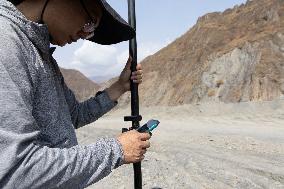
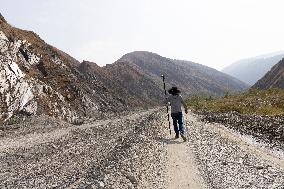
(240514) -- DONGCHUAN, May 14, 2024 (Xinhua) -- Researcher Li Xiaoyu measures the change of debris flow channels with mapping equipment at the Jiangjiagou ravine in Dongchuan District of Kunming, southwest China's Yunnan Province, May 7, 2024. The Jiangjiagou ravine, located in the Xiaojiang River Basin, was a frequent landslide occurring area. In 1961, an observation and research station of debris flows, known as Dongchuan Station, was established in Jiangjiagou area. Since then, several generations of researchers have observed and studied debris flows, and established a comprehensive disaster reduction model of "stabilizing, blocking and draining", which has laid the foundation of debris flow science in China. A large-scale dynamic simulation experiment platform for mountain disaster was recently put into use in Dongchuan Station. The completion of this scientific device will reveal the natural law of debris flow outbreak, tackle the problems on prevention and control, and reduce the harm on human. (Xi

  •  
(EyesOnSci)CHINA-YUNNAN-DEBRIS FLOW-SCIENTIFIC RESEARCH (CN)

(EyesOnSci)CHINA-YUNNAN-DEBRIS FLOW-SCIENTIFIC RESEARCH (CN)

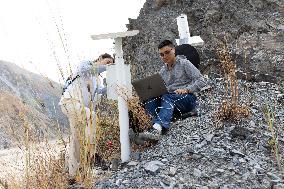
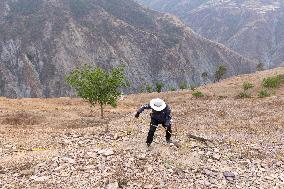
(240514) -- DONGCHUAN, May 14, 2024 (Xinhua) -- Researcher Zhong Wei sets up scientific devices on the alluvial fan of debris flow at the Jiangjiagou ravine in Dongchuan District of Kunming, southwest China's Yunnan Province, May 7, 2024. The Jiangjiagou ravine, located in the Xiaojiang River Basin, was a frequent landslide occurring area. In 1961, an observation and research station of debris flows, known as Dongchuan Station, was established in Jiangjiagou area. Since then, several generations of researchers have observed and studied debris flows, and established a comprehensive disaster reduction model of "stabilizing, blocking and draining", which has laid the foundation of debris flow science in China. A large-scale dynamic simulation experiment platform for mountain disaster was recently put into use in Dongchuan Station. The completion of this scientific device will reveal the natural law of debris flow outbreak, tackle the problems on prevention and control, and reduce the harm on human. (Xinhua/

  •  
(EyesOnSci)CHINA-YUNNAN-DEBRIS FLOW-SCIENTIFIC RESEARCH (CN)

(EyesOnSci)CHINA-YUNNAN-DEBRIS FLOW-SCIENTIFIC RESEARCH (CN)

(240514) -- DONGCHUAN, May 14, 2024 (Xinhua) -- Researchers Song Dongri (R), Zhong Wei (L) and Wei Li investigate and evaluate the condition of a sand-retaining dam in Dongchuan District of Kunming, southwest China's Yunnan Province, May 8, 2024. The Jiangjiagou ravine, located in the Xiaojiang River Basin, was a frequent landslide occurring area. In 1961, an observation and research station of debris flows, known as Dongchuan Station, was established in Jiangjiagou area. Since then, several generations of researchers have observed and studied debris flows, and established a comprehensive disaster reduction model of "stabilizing, blocking and draining", which has laid the foundation of debris flow science in China. A large-scale dynamic simulation experiment platform for mountain disaster was recently put into use in Dongchuan Station. The completion of this scientific device will reveal the natural law of debris flow outbreak, tackle the problems on prevention and control, and reduce the harm on human.

  •  
(EyesOnSci)CHINA-YUNNAN-DEBRIS FLOW-SCIENTIFIC RESEARCH (CN)

(EyesOnSci)CHINA-YUNNAN-DEBRIS FLOW-SCIENTIFIC RESEARCH (CN)

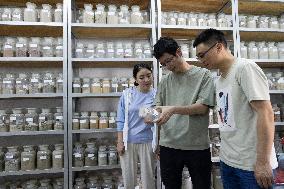
(240514) -- DONGCHUAN, May 14, 2024 (Xinhua) -- Researchers Song Dongri (C), Li Xiaoyu (R) and Wei Li check the preservation of samples at Dongchuan Station in Dongchuan District of Kunming, southwest China's Yunnan Province, May 7, 2024. The Jiangjiagou ravine, located in the Xiaojiang River Basin, was a frequent landslide occurring area. In 1961, an observation and research station of debris flows, known as Dongchuan Station, was established in Jiangjiagou area. Since then, several generations of researchers have observed and studied debris flows, and established a comprehensive disaster reduction model of "stabilizing, blocking and draining", which has laid the foundation of debris flow science in China. A large-scale dynamic simulation experiment platform for mountain disaster was recently put into use in Dongchuan Station. The completion of this scientific device will reveal the natural law of debris flow outbreak, tackle the problems on prevention and control, and reduce the harm on human. (Xinhua/

  •  
(EyesOnSci)CHINA-YUNNAN-DEBRIS FLOW-SCIENTIFIC RESEARCH (CN)

(EyesOnSci)CHINA-YUNNAN-DEBRIS FLOW-SCIENTIFIC RESEARCH (CN)

(240514) -- DONGCHUAN, May 14, 2024 (Xinhua) -- This photo taken on May 8, 2024 shows the large-scale dynamic simulation experiment platform for mountain disaster after an experiment at Dongchuan Station in Dongchuan District of Kunming, southwest China's Yunnan Province. The Jiangjiagou ravine, located in the Xiaojiang River Basin, was a frequent landslide occurring area. In 1961, an observation and research station of debris flows, known as Dongchuan Station, was established in Jiangjiagou area. Since then, several generations of researchers have observed and studied debris flows, and established a comprehensive disaster reduction model of "stabilizing, blocking and draining", which has laid the foundation of debris flow science in China. A large-scale dynamic simulation experiment platform for mountain disaster was recently put into use in Dongchuan Station. The completion of this scientific device will reveal the natural law of debris flow outbreak, tackle the problems on prevention and control, and

  •  
(EyesOnSci)CHINA-YUNNAN-DEBRIS FLOW-SCIENTIFIC RESEARCH (CN)

(EyesOnSci)CHINA-YUNNAN-DEBRIS FLOW-SCIENTIFIC RESEARCH (CN)

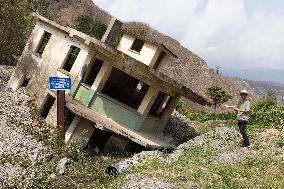
(240514) -- DONGCHUAN, May 14, 2024 (Xinhua) -- Researcher Song Dongri shows the observation building No. 1, which was washed and toppled by debris flow in 2007, in Dongchuan District of Kunming, southwest China's Yunnan Province, May 7, 2024. The Jiangjiagou ravine, located in the Xiaojiang River Basin, was a frequent landslide occurring area. In 1961, an observation and research station of debris flows, known as Dongchuan Station, was established in Jiangjiagou area. Since then, several generations of researchers have observed and studied debris flows, and established a comprehensive disaster reduction model of "stabilizing, blocking and draining", which has laid the foundation of debris flow science in China. A large-scale dynamic simulation experiment platform for mountain disaster was recently put into use in Dongchuan Station. The completion of this scientific device will reveal the natural law of debris flow outbreak, tackle the problems on prevention and control, and reduce the harm on human. (Xi

  •  
(EyesOnSci)CHINA-YUNNAN-DEBRIS FLOW-SCIENTIFIC RESEARCH (CN)

(EyesOnSci)CHINA-YUNNAN-DEBRIS FLOW-SCIENTIFIC RESEARCH (CN)

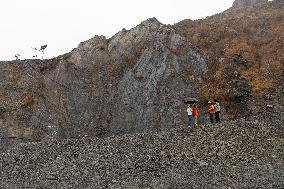
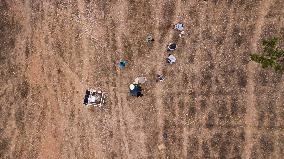
(240514) -- DONGCHUAN, May 14, 2024 (Xinhua) -- An aerial drone photo taken on May 7, 2024 shows researchers detecting strata on the alluvial fan of debris flow at the Jiangjiagou ravine in Dongchuan District of Kunming, southwest China's Yunnan Province. The Jiangjiagou ravine, located in the Xiaojiang River Basin, was a frequent landslide occurring area. In 1961, an observation and research station of debris flows, known as Dongchuan Station, was established in Jiangjiagou area. Since then, several generations of researchers have observed and studied debris flows, and established a comprehensive disaster reduction model of "stabilizing, blocking and draining", which has laid the foundation of debris flow science in China. A large-scale dynamic simulation experiment platform for mountain disaster was recently put into use in Dongchuan Station. The completion of this scientific device will reveal the natural law of debris flow outbreak, tackle the problems on prevention and control, and reduce the harm o

  •  
(EyesOnSci)CHINA-YUNNAN-DEBRIS FLOW-SCIENTIFIC RESEARCH (CN)

(EyesOnSci)CHINA-YUNNAN-DEBRIS FLOW-SCIENTIFIC RESEARCH (CN)

(240514) -- DONGCHUAN, May 14, 2024 (Xinhua) -- Researcher Li Xiaoyu measures the change of debris flow channels with mapping equipment at the Jiangjiagou ravine in Dongchuan District of Kunming, southwest China's Yunnan Province, May 7, 2024. The Jiangjiagou ravine, located in the Xiaojiang River Basin, was a frequent landslide occurring area. In 1961, an observation and research station of debris flows, known as Dongchuan Station, was established in Jiangjiagou area. Since then, several generations of researchers have observed and studied debris flows, and established a comprehensive disaster reduction model of "stabilizing, blocking and draining", which has laid the foundation of debris flow science in China. A large-scale dynamic simulation experiment platform for mountain disaster was recently put into use in Dongchuan Station. The completion of this scientific device will reveal the natural law of debris flow outbreak, tackle the problems on prevention and control, and reduce the harm on human. (Xi

  •  
(EyesOnSci)CHINA-YUNNAN-DEBRIS FLOW-SCIENTIFIC RESEARCH (CN)

(EyesOnSci)CHINA-YUNNAN-DEBRIS FLOW-SCIENTIFIC RESEARCH (CN)

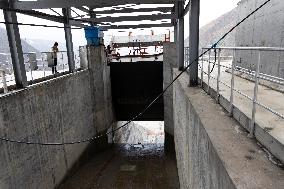
(240514) -- DONGCHUAN, May 14, 2024 (Xinhua) -- This photo taken on May 8, 2024 shows a sluice gate of the large-scale dynamic simulation experiment platform for mountain disaster closing at Dongchuan Station in Dongchuan District of Kunming, southwest China's Yunnan Province. The Jiangjiagou ravine, located in the Xiaojiang River Basin, was a frequent landslide occurring area. In 1961, an observation and research station of debris flows, known as Dongchuan Station, was established in Jiangjiagou area. Since then, several generations of researchers have observed and studied debris flows, and established a comprehensive disaster reduction model of "stabilizing, blocking and draining", which has laid the foundation of debris flow science in China. A large-scale dynamic simulation experiment platform for mountain disaster was recently put into use in Dongchuan Station. The completion of this scientific device will reveal the natural law of debris flow outbreak, tackle the problems on prevention and control,

  •  
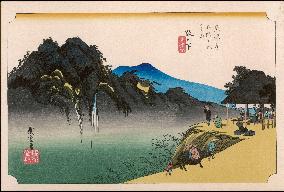
Hiroshige - 53 Stations of the Tokaido - Print 49

Hiroshige - 53 Stations of the Tokaido - Print 49

49 Saka-no-shita - Travellers resting at an open teahouse, looking across a ravine to the rocky heights opposite; blue hills beyond, in colour blocks only. In olden times, the beauty of the rugged mountain ranges in this area attracted many visitors from Kyoto. Travellers enjoyed the spectacular view of the mountain from a teahouse located on the mountain pass. Utagawa Hiroshige (1797 - 1858). The Fifty-Three Stations of the Tokaido - Hoeido edition (1831-4) Date: 1831 - 1834

  •  
A rapid river at Miyanoshita

A rapid river at Miyanoshita

This is Hayakawa River as seen between Miyanoshita and Kiga Hot Springs. The wooden bridge must be the one near present-day Tokyo Electric Kawakubo Power Plant along the Hayakawa Promenade. The roof of a building is visible at center left, but it is not clear what it is.==Date:unknown, Place:Hakone, Photo:unknown, (Credit:Nagasaki University Library/Kyodo News Images) [Cabinet Number98‐37‐0]

  •  
The volcanic crater of Mt. Fuji

The volcanic crater of Mt. Fuji

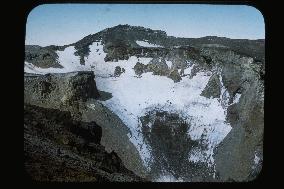
The summit of Mt. Fuji. There are two craters of different sizes. The deep, sharp ravine of Dainaiin Crater, the larger of the two, is visible in the centre. The rock on the left is Toraiwa, and the peak in the distance is Kengamine (alt. 3776m). Some snow still remains.==Date:1904, Place:Shizuoka, Photo:unknown, (Credit:Nagasaki University Library/Kyodo News Images) [Cabinet Number98‐12‐0]

  •  
The Miyagino River

The Miyagino River

This photo shows Hayakawa River and Miyagino taken from about 100m downstream from the present Miyagino Bridge (around the Soba Shop Miyabi ). The huge rocks and trees are still extant. The big rock on the left is now gone, with a building standing on the site. National Route 138 passes on its left. The mountains in the background are from right, Myojingadake, Hiuchiishidake, and Mt. Kozuka.==Date:unknown, Place:Hakone, Photo:A. Farsari, (Credit:Nagasaki University Library/Kyodo News Images) [Cabinet Number82‐25‐0]

  •  
Tonosawa

Tonosawa

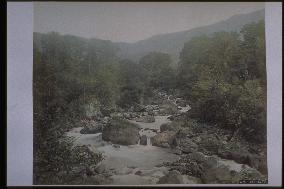
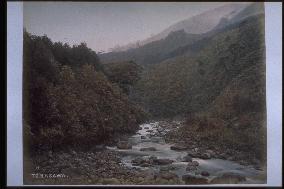
This is a little higher up from the present iron bridge of Deyama. The Hayakawa River flows in the center. The gradient is milder around here, and so is the flow. The mountain on the right is the foot of Tonomine and a part of Mt. Myougadake is visible behind. There is Amida Temple in Tonomine. The forest on the left is at the foot of Mt. Yusaka, and at present National Route 1 runs along Hayakawa River.==Date:unknown, Place:Hakone, Photo:R. Stillfried, (Credit:Nagasaki University Library/Kyodo News Images) [Cabinet Number77‐15‐0]

  •  
The Katsura River

The Katsura River

Hozugawa Valley looking upstream. The topography suggests that this was taken from the valley at the west entrance of Asahi Tunnel on the former Japan National Railroad San'in Line, facing northwest. Mt. Ushimatsu is visible in the centre. Since no railroad tracks are visible, the photograph was probably taken before the opening of Sagano-Sonobe Line of Kyoto Railway in August 1899. Taken by Tamamura Kozaburo.==Date:unknown, Place:Kyoto, Photo:Tamamura Kozaburo, (Credit:Nagasaki University Library/Kyodo News Images) [Cabinet Number68‐13‐0]

  •  
Nunobiki Falls

Nunobiki Falls

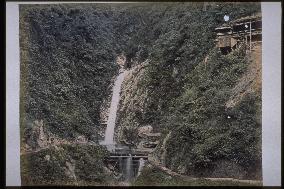
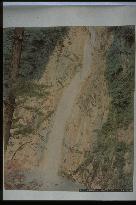
Medaki waterfall at Nunobiki Falls, taken around the same time as photograph #2271 (Shinkoji Temple), #4092 (Mt. Suwa), and #4094 (Arima Spa) in the mid-Meiji Period. Visitors normally took the path on the right side of the river and then proceeded along the road to the left to Medaki waterfall. After that, they crossed a wooden bridge and negotiated the winding mountain path to Odaki waterfall.==Date:unknown, Place:Kobe, Photo:Tamamura Kozaburo, (Credit:Nagasaki University Library/Kyodo News Images) [Cabinet Number68‐4‐2]

  •  
Teahouses along the Koshu Road

Teahouses along the Koshu Road

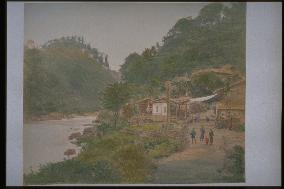
The bank of Katsura River, which separated the feudal domains of Sagami and Kai along the old Koshu Highway (present-day Uenohara-machi in southeastern Yamanashi Prefecture), seen from the east side (Sagami side) of the river. The buildings are teahouses standing along the highway, the existence of which is reported in travel journals as early as the Tenpo Period (1830-44). The mountain station Suwa-no-Sekisho (Kuchidome Bansho) is up the slope on the right. Mt. Gongen of Nakura is visible on the other side of Katsura River.==Date:unknown, Place:Yamanashi, Photo:Usui Shuzaburo?, (Credit:Nagasaki University Library/Kyodo News Images) [Cabinet Number65‐10‐0]

  •  
Owaku-dani Valley

Owaku-dani Valley

This is the same photo as catalogue #2966. However, this print appears to have been exposed for a shorter time, and therfore, rays of light can be seen shining from the upper right.==Date:unknown, Place:Hakone, Photo:unknown, (Credit:Nagasaki University Library/Kyodo News Images) [Cabinet Number64‐29‐0]

  •  
Owaku-dani Valley

Owaku-dani Valley

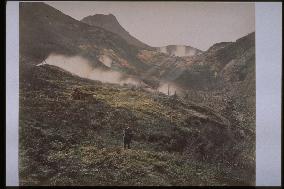
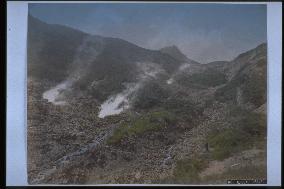
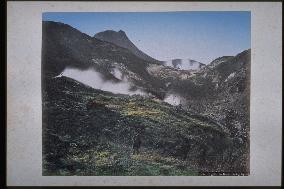
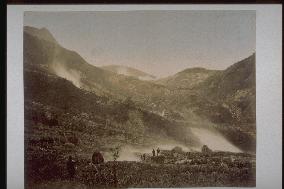
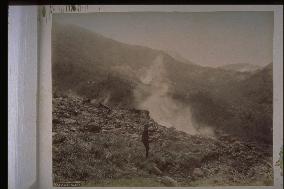
Owakudani is the place where Chuo-Shinzan of Hakone Volcano erupted. A considerable amount of hydrogen sulfide gas is emitted. Thus, normal plants cannot survive. This photo depicts the rough rocky valley. The person in the lower right shows the vastness of the area. At present, this scene can be observed from the Hakone ropeway.==Date:unknown, Place:Hakone, Photo:unknown, (Credit:Nagasaki University Library/Kyodo News Images) [Cabinet Number59‐66‐0]

  •  
Owaku-dani Valley

Owaku-dani Valley

Erwin von Baltz, who came to Japan as a professor at Tokyo Medical School in 1876, had the idea of using the hot spring of Owakudani for medial rehabilitation. He proposed to the Department of Internal Affairs to have a large bath facility built. This proposal was turned down, and Baltz disappointedly went back to Germany. In this photo, there is a man heading toward a shack. Above steam is emitted.==Date:unknown, Place:Hakone, Photo:unknown, (Credit:Nagasaki University Library/Kyodo News Images) [Cabinet Number59‐54‐0]

  •  
A fisherman in a mountain gorge

A fisherman in a mountain gorge

A man catches fish in a suburb of Nagasaki around 1887. The hand-tinted photograph captures the natural beauty of Nagasaki and the appearance of a fisherman. There are small rivers in the Nagasaki area. Also, many photographs were taken of Wakana River in Mogi, outside Nagasaki.==Date:unknown, Place:Nagasaki, Photo:unknown, (Credit:Nagasaki University Library/Kyodo News Images) [Cabinet Number58‐14‐0]

  •  
Nunobiki Falls

Nunobiki Falls

This is Otaki Waterfall of Nunobiki. Many culturally enlightened people have visited here since ancient times as mentioned in the stories from Heian Period such as The Tale of Ise and The Tale of Prosperity. Nunobiki is located just a few hundred meters behind Shin Kobe Station of the Sanyo Shinkansen Line. It still has the atmosphere of a mystically deep mountain. Probably mid- Meiji Period.==Date:unknown, Place:Kobe, Photo:unknown, (Credit:Nagasaki University Library/Kyodo News Images) [Cabinet Number56‐16‐0]

  •  
A gorge along the Katsura River

A gorge along the Katsura River

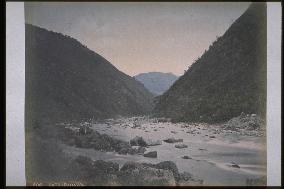
Hozugawa Valley seen from downstream looking upstream. Since the water level is relatively low and the flow gentle, the camera was probably affixed to a tripod placed in the riverbed.==Date:unknown, Place:Kyoto, Photo:unknown, (Credit:Nagasaki University Library/Kyodo News Images) [Cabinet Number52‐6‐0]

  •  
Owaku-dani Valley

Owaku-dani Valley

Owakudani is the crater formed by the erruption of Mt. Hakone. Until the beginning of Meiji, it was called Ohjigoku (Big Hell) and was believed to a place where spirits dwell. When Emperor and Empress Meiji spent time at Naraya Hotel of Miyanoshita in 1873, they thought it was unpleasant to have hell nearby, and therefore Ojigoku was renamed Owakudani. Some people are visible. The mountain on the left is Kanmuridake.==Date:unknown, Place:Hakone, Photo:unknown, (Credit:Nagasaki University Library/Kyodo News Images) [Cabinet Number47‐15‐0]

  •  
Clear stream among mountains

Clear stream among mountains

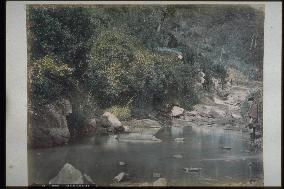
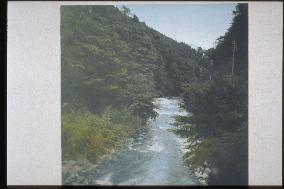
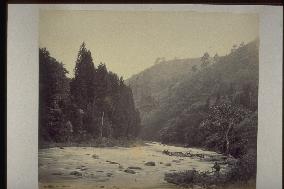
A view of the direction of Tonosawa from downstream of the Haya River, near the steel bridge of the present Hakone Tozan Railway. The place is called Osaka. Since electric wires can be seen, we know that the photo was taken after 1892. Probably taken simultaneously as the photo numbered 46-181.==Date:unknown, Place:Hakone, Photo:unknown, (Credit:Nagasaki University Library/Kyodo News Images) [Cabinet Number46‐182‐0]

  •  
Stone Gate at Mt. Mitake Shosenkyo

Stone Gate at Mt. Mitake Shosenkyo

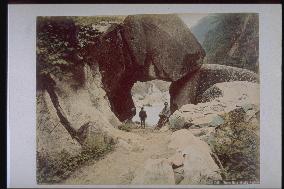
A huge stone gate and two people. This gate which was formed by natural winds and rain from the plutonic rocks is located in the valley of Ontake Shosenkyo, upper stream of Ara River which is a branch of the Fuefuki River.==Date:unknown, Place:Yamanashi, Photo:Kusakabe Kinbei, (Credit:Nagasaki University Library/Kyodo News Images) [Cabinet Number40‐19‐0]

  •  
Miyagase,Nakatsugawa Gorge

Miyagase,Nakatsugawa Gorge

A photo from the album of F. Beato. A view of Miyagase valley on the Nakatsu River, a stream flowing from Sagami River (Banyu River). It was a scenic spot which could be covered in one day on horseback from Yokohama.==Date:unknown, Place:Kanagawa, Photo:F. Beato, (Credit:Nagasaki University Library/Kyodo News Images) [Cabinet Number36‐3‐0]

  •  
Kiga road

Kiga road

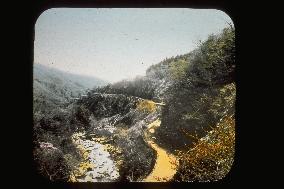
A slide of the photo numbered 5-11. It is a road connecting Miyanoshita and Miyagino, near the starting point of the present National Route 138. The river to the left is Haya River. Before the great fire of 1892, it was a famous spa with many hotels. It is also known as a popular spot for autumn colours.==Date:unknown, Place:Hakone, Photo:unknown, (Credit:Nagasaki University Library/Kyodo News Images) [Cabinet Number31‐49‐0]

  •  
River in valley

River in valley

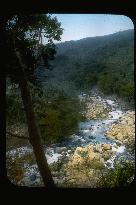
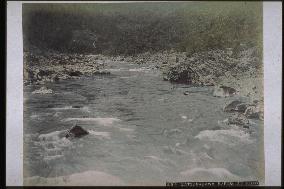
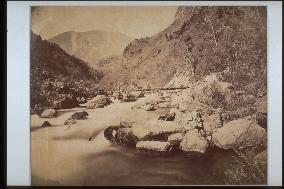
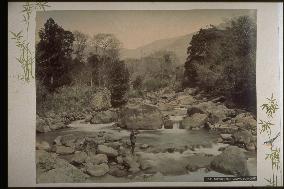
Great rocks stand here and there, and the water rushes past them. The exposure time is long so the splashes of water cannot be seen, but the fast river flow can be observed. A person crosses the bridge in the distance.==Date:unknown, Place:unknown, Photo:[R. Stillfried], (Credit:Nagasaki University Library/Kyodo News Images) [Cabinet Number27‐10‐0]

  •  
River in valley

River in valley

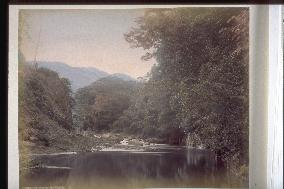
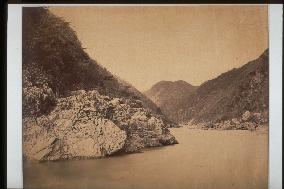
The place is unknown. It is quite a large river. The abundant water flowing slowly through the mountain valley can be observed.==Date:unknown, Place:unknown, Photo:[R. Stillfried], (Credit:Nagasaki University Library/Kyodo News Images) [Cabinet Number27‐8‐0]

  •  
Valley at yumoto

Valley at yumoto

A view of the new Tamanoyu Hotel upstream along the Haya River around the former prefectural Hakone Tourist Building. The scene in Haya River has changed due to flooding and improvement projects along the river, but the natural scenery has not changed. Probably the same photo as that numbered 9-5.==Date:unknown, Place:Hakone, Photo:Ogawa Kazumasa, (Credit:Nagasaki University Library/Kyodo News Images) [Cabinet Number9‐6‐0]

  •  
River at miyagino

River at miyagino

A view of Miyagino bridge from the bottom of the present Gorazaka. The water of the Haya River and people fishing can be seen. The present scenery is different due to the change in the stone walls and embankment, but the same big rocks in the photo still exist. The trees on both sides and the distant mountain (Myojindake) have not changed to the present day.==Date:unknown, Place:Hakone, Photo:Ogawa Kazumasa, (Credit:Nagasaki University Library/Kyodo News Images) [Cabinet Number5‐12‐0]

  •  
Palanquins at owakudani valley

Palanquins at owakudani valley

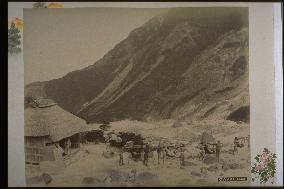
A tea house and procession of passengers in palanguins. Owakudani was toured on foot, or in palanguins or chairs (for foreigners). From the title on the negative, we can see that this photo was taken by Shima Shukichi who owned a photo studio in Miyanoshita. The mountain on the opposite side is Kanmuridake.==Date:unknown, Place:Hakone, Photo:Ogawa Kazumasa, (Credit:Nagasaki University Library/Kyodo News Images) [Cabinet Number5‐14‐0]

  •  
Owaku-dani Valley

Owaku-dani Valley

Owakudani used to be called Ojigoku (meaning great hell), but on the occasion of the visit of the Emperor Meiji in 1874, it was renamed Owakudani to avoid the name of hell. So, this photo was taken after 1874. The mountain to the left is the highest mountain in Hakone, Kamiyama.==Date:unknown, Place:Hakone, Photo:Ogawa Kazumasa, (Credit:Nagasaki University Library/Kyodo News Images) [Cabinet Number5‐13‐0]

  • Main
  • Top
  • Editorial
  • Creative
  • About Us
  • About ILG
  • Terms of use
  • Company
  • BEHIND
  • Price List
  • Single Plan
  • Monthly Plan
  • Services
  • Shooting
  • Rights Clearance
  • Support
  • FAQ
  • How To Buy
  • Contact Us
  • Become a Partner

© KYODO NEWS IMAGES INC

All Rights Reserved.

  • Editorial
  • Olympics
  • News
  • Sports
  • Japan
  • Tech
  • Royal
  • Disaster
  • NorthKorea
  • Old Japan
  • SNS
  • Creative
  • Food
  • Japan
  • Landscape
  • Animal
  • Popular
  • #Ukraine
  • #Thailand
  • #coronavirus
  • #N. Korea
  • #Russia
  • #China
  • #Ukraine
  • #Thailand
  • #coronavirus
  • #N. Korea
  • #Russia
  • #China
  • Food
  • Japan
  • Landscape
  • Animal
  • Olympics
  • News
  • Sports
  • Japan
  • Tech
  • Royal
  • Disaster
  • NorthKorea
  • Old Japan
  • SNS